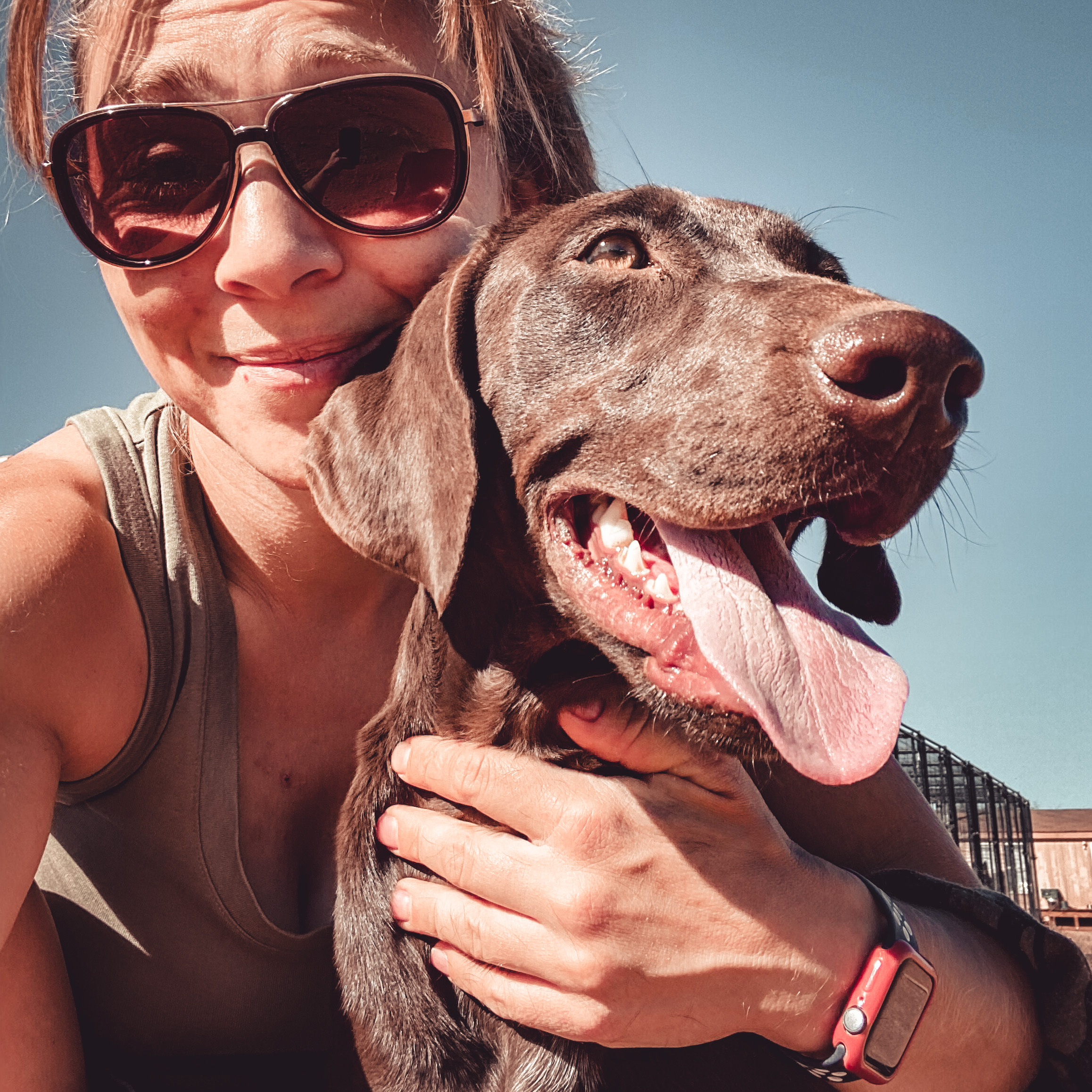
German Shorthaired Pointers are incredible dogs.
They are athletic, loyal, intelligent, funny, affectionate, adventurous, and deeply connected to their people. They are the kind of dog that can make life feel bigger, more active, and more fun.
But they are also not easy dogs.
A well-bred GSP is not usually difficult because they are bad, aggressive, malicious, or trying to make your life miserable. More often, they are difficult because they are immature, athletic, driven, and far more capable than the average family expects.
They are sporting dogs. They were bred to move, hunt, explore, use their nose, solve problems, and work closely with their people. When those traits are understood and channeled, they are some of the most rewarding dogs you can own. When those traits are misunderstood, they can be frustrating, overwhelming, and easy to mislabel.
Before bringing home a German Shorthaired Pointer, it’s important to understand the three biggest struggles most families face with the breed.
1. The Regression Phase: From Sweet Puppy to Teenage Menace
One of the hardest seasons with a GSP is the regression phase that often begins around four months of age and can continue, in different forms, until the dog is around 18 months old.
This is the “teenage phase.”
Just like human teenagers, young dogs go through a period where they test limits, push boundaries, act impulsively, forget things they seemed to know before, and make you wonder if all your training disappeared overnight.
This phase can be very stressful if you aren’t expecting it.
Around 4–6 months, many GSP puppies become especially mouthy. Their baby teeth are falling out, their adult teeth are coming in, and they are trying to figure out how to use their mouth appropriately. During this period, they may nip, bite, grab clothes, mouth hands, and get overly excited during play.
And because puppy teeth are sharp, this can be really uncomfortable.
The good news is that those puppy teeth usually fall out around six months of age. The bad news is that those few months can feel very long when you’re living with a wiggly, mouthy, high-energy puppy who is still learning self-control.
This does not mean your puppy is aggressive.
It usually means your puppy is teething, overstimulated, overtired, under-structured, or simply acting like an immature sporting dog puppy.
During this phase, your job is not to panic. Your job is to provide structure.
That may mean using the crate more, enforcing naps, limiting free access to the house, redirecting biting onto appropriate toys, using a leash in the house when needed, and going back to basic manners over and over again.
You cannot treat a 5-month-old GSP like a finished adult dog. They are still very much under construction.
The same is true during adolescence. From about 6–18 months, many GSPs will test boundaries again and again. They may seem more impulsive, more distracted, more intense, or more difficult to manage. This is a normal developmental stage, not a sign that your dog is ruined.
The biggest mistake owners make during this season is assuming the behavior they see at 8, 10, or 12 months is the dog’s permanent personality.
It usually isn’t.
This phase ends. But it ends best when the owner stays consistent, gives the dog structure, and does not make permanent decisions during a temporary developmental stage.
2. Their Athleticism and Drive Can Be Frustrating
German Shorthaired Pointers are extremely athletic dogs.
This is part of what makes them so fun. They are healthy, powerful, agile, and capable. They can run, jump, climb, twist, launch, and problem-solve in ways that surprise people.
But that same athleticism can become frustrating when it is not managed.
A GSP may jump on counters if they learn there is something interesting up there. They may “couch surf,” launching from one piece of furniture to another like your living room is an agility course. They may jump fences if they see something on the other side they want badly enough.
They usually aren’t doing these things to be malicious.
They are doing them because they are capable, curious, driven, and impulsive.
That is the tricky part about this breed: they are often physically able to act on the thing they want before you even realize they are thinking about it.
They see the bird.
They smell the food.
They notice the open gate.
They hear the kids playing.
They spot the rabbit on the other side of the fence.
And then they act.
This can be very frustrating for owners who expect a dog to simply “know better.” A young GSP often does not know better yet, and even when they do, their drive may still override their self-control if the environment is too tempting.
That means management matters.
Training matters, but management matters too.
You cannot rely only on verbal correction or good intentions. You may need secure fencing, crate time, structured exercise, supervised freedom, clear boundaries, and a home setup that does not constantly invite the dog to make bad decisions.
A GSP is not a low-effort dog. Their athleticism is one of their gifts, but it has to be respected.
3. They Need to Be Integrated Into Your Life
This may be the biggest thing families misunderstand about German Shorthaired Pointers.
A GSP is not a dog you buy to simply tag along in the background of your life.
They are not usually satisfied being a dog who hangs out at the house, sits in your office all day, and takes one or two 20-minute walks.
At least not while they are young.
A GSP needs to be integrated into your life. They need to be part of your daily rhythm. They want to go, do, explore, sniff, run, chase, watch, help, investigate, and be involved.
They are not just energetic. They are engaged.
That distinction matters.
A lot of people think a GSP simply needs exercise, but it is more than that. They need their brain engaged too. They need enrichment. They need opportunities to use their nose, problem-solve, learn, and participate.
The most successful GSP owners tend to include their dog in many of their daily activities.
If they are working in the yard, the dog is out there with them.
If they are heading to town, the dog often tags along.
If they are going hiking, camping, scouting, training, or exploring, the dog is part of it.
If they are outside doing chores, the dog is nearby, involved, and learning how to exist within the family’s life.
These dogs thrive when they are not just owned, but included.
That does not mean you have to entertain them every second of the day. It does not mean your life has to revolve entirely around the dog. But it does mean they need more than passive companionship.
If the family is busy and gone during the day, the dog needs an engaging, enriching setup and then meaningful interaction when the family is home. That might include training games, scent work, structured play, running, hiking, retrieving, field work, long-line exploration, or other activities that give the dog’s body and brain a job.
A young GSP will usually not be satisfied with one or two short daily walks until they are much older.
For many GSPs, that easier “hang out and chill” stage does not truly arrive until around seven years old. Some mature sooner, some later, but most young GSPs need a lot of engagement before they become the relaxed adult dog people imagined.
A GSP Is Not a Bad Dog Because They Are a Lot of Dog
One of the most important things to understand is that these struggles are not character flaws.
A mouthy puppy is not automatically aggressive.
A dog who jumps, runs, explores, and pushes boundaries is not automatically bad.
A dog with hunting drive is not defective.
A GSP who needs more engagement than the average family expected is not trying to ruin your life.
These are often normal traits of a young German Shorthaired Pointer.
The question is not whether these traits exist. The question is whether your home, lifestyle, expectations, and patience are suited to manage and enjoy them.
For the right family, a GSP is incredible. They are adventure partners, hunting companions, family dogs, running buddies, comic relief, and loyal shadows. They make life active and full.
But they are not the right dog for everyone.
They need owners who can stay steady through the teenage phase, provide structure without resentment, respect their athleticism, and engage their drive in productive ways.
If you want a dog who will simply exist quietly in the background of your life, a German Shorthaired Pointer may not be the best fit.
But if you want a dog who becomes part of your everyday life—who joins the adventure, keeps you moving, makes you laugh, challenges you, and bonds deeply with your family—a GSP can be one of the most rewarding dogs you will ever own.
The key is knowing what you are signing up for before you bring one home.